
OUI / DUI Defense
How Massachusetts OUI Defense Reviews Evidence, Court Steps, and License Questions
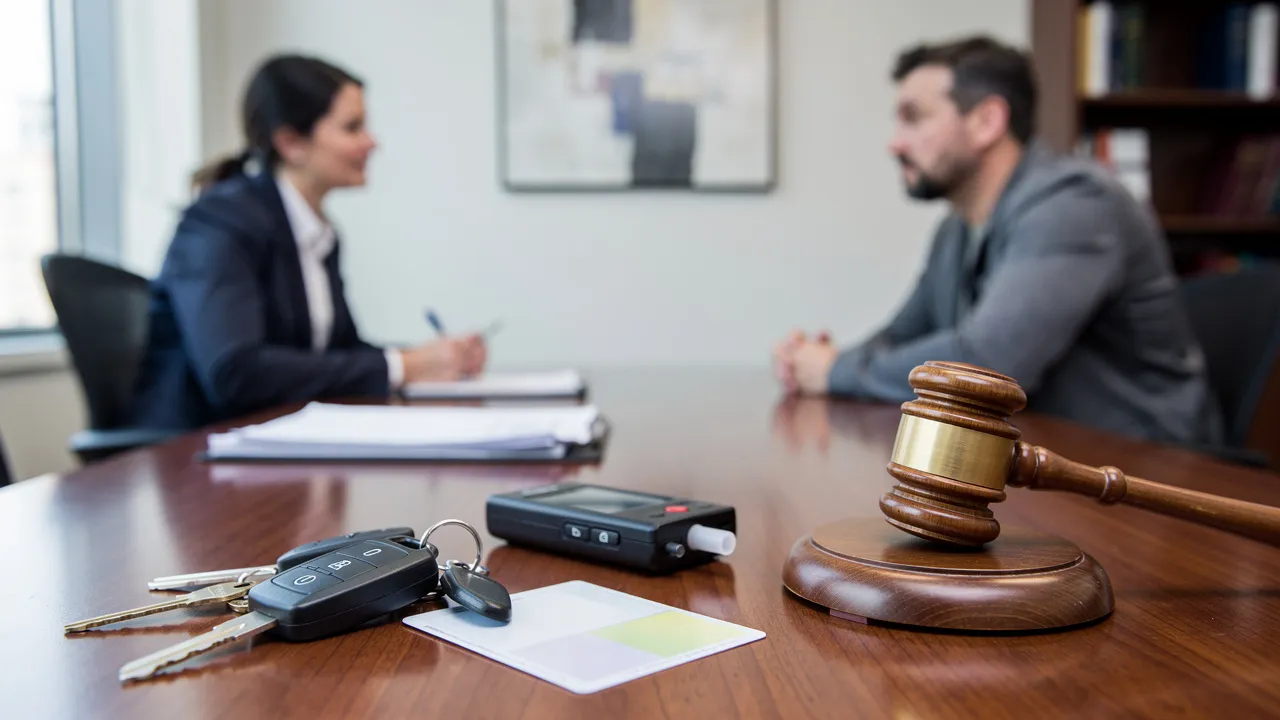
Massachusetts OUI defense considers the whole case
We handle defense against OUI and drunk-driving charges in Massachusetts courts. If you have been charged, a useful review looks beyond a single test or event: it considers the stop, the evidence available, the stage of your court case, and any license questions.
Those issues connect, but they are not interchangeable. A question about why an officer stopped and detained you differs from what a test result may establish. Both differ from what you need to know about a court date or a license notice. Keeping the questions separate helps you identify what is known, what is still unclear, and what needs case-specific attention.
You can organize the discussion in four parts:
- What led to the stop and detention?
- What do the police report, booking video, and testing records show?
- If a test result is challenged or excluded, what evidence may remain?
- What court and license questions still need answers?
This order is a way to sort the issues, not a prediction about what any one of them means. As you read, keep your own documents and recollection in view. Note the court named on your paperwork, dates printed on notices, and questions you cannot answer from the documents. That gives you a concrete starting point without treating one fact as the answer to the whole case.
Charged? Talk to Attorney Reinhardt.
Leave a name and a number — he reviews every request personally.
Review the stop and testing evidence
The stop review begins with what happened before testing.
For your own notes, separate what you remember from what appears in a report or video. Write down the sequence as you understand it, then mark details that seem unclear or differ from the documents. You do not need to turn those differences into a legal conclusion. They are questions to raise during a review.
A focused set of questions can keep the stop discussion specific:
- What reason for the stop appears in the police report?
- What does the booking video show, and which parts of the encounter does it cover?
- What do the available records show about the stop and detention?
- Which details in your recollection do you want to compare with the written account?
These prompts help you distinguish the event itself from the explanation recorded afterward. They do not establish that a stop was lawful or unlawful. Leave that conclusion open until the facts and applicable law have been considered.
Testing calls for its own review. We scrutinize field sobriety tests and breath-machine calibration and certification as part of our review of tests in an OUI case. The specific records and test information matter; the fact that testing occurred does not, by itself, answer every question about it.
Make a short inventory of testing material you have, material mentioned in your paperwork, and anything you do not understand. Note whether the records include information about field sobriety testing or breath-machine calibration and certification. Then identify what you want explained: what the available material shows, what it does not answer, and how it relates to the charge. An unclear record is a reason to ask a question, not proof for either side.
Keep the inventory factual. For each item, write its name, where you found it, and the question it raises. For example, separate a detail you recall from a statement in a police report; do not combine them into a single account before comparing them. If a record refers to a test or event you do not recognize, mark the reference and ask what it means in the context of your case. This makes it easier to discuss the evidence without assuming that a document settles the issue.
Excluding a breath-test result does not automatically end the charge
In Massachusetts, excluding the breath-test final analysis does not automatically dismiss an OUI charge. The next question is what other evidence may remain and how the Commonwealth may use it. A ruling about one piece of evidence is not, on its own, a decision that the case has ended.
If a judge excludes the breath-test final analysis, the Commonwealth may continue on an impairment theory using driving, observations, statements, and field sobriety evidence. The presence of those forms of evidence does not determine the outcome by itself. It means you need to understand what remains and what role it may play.
Keep two questions distinct: whether the breath-test final analysis is admitted, and what other evidence may be used if it is excluded. You can ask which evidence remains at issue and whether the case is being pursued on an impairment theory. The answer depends on the case, not simply on whether one result is available.
An admitted breath-test final analysis can still be challenged for its weight, and the Commonwealth must prove every other element. Admission is not the same as an automatic conclusion about the charge.
When you discuss an admitted result, separate three questions: whether the result is admitted, what weight it may receive, and whether the Commonwealth proves the remaining elements. Ask what the result is being used to show and what other elements remain at issue. That keeps the conversation focused on the full proof rather than giving one test result more significance than the case-specific review supports.

Know what arraignment and the next court date involve
As of November 1, 2026, Massachusetts arraignment guidance describes three possible pleas: not guilty, guilty, or nolo contendere. At arraignment, the charge is read aloud; the clerk may enter a not-guilty plea for you or ask how you want to plead.
A not-guilty plea means you deny the charge or want a trial. A guilty plea means you admit the charge is true. Nolo contendere, or no contest, means you do not plead guilty but are willing to be sentenced as if you were found guilty. The terms have different meanings. Before responding, make sure you understand what is being asked and what each option means in your circumstances.
The Massachusetts guidance says that if you are charged with an offense for which you could receive jail time and cannot afford a lawyer, the judge will appoint a lawyer. Both conditions matter: possible jail time for the offense and inability to afford counsel. If you believe those conditions apply to you, be ready to explain your situation when the court addresses counsel. The appointed lawyer may be called the “duty lawyer” for the day and is usually at the courthouse, likely in the courtroom. The guidance says you may have an opportunity to speak briefly with that lawyer before or after arraignment, during a recess or outside the courtroom.
If your case is not disposed of at arraignment, a pre-trial conference date will be set and you must return on that date. Keep the date and court information from your paperwork together, and put the appearance in your calendar. If you are unsure whether the case was resolved or which date you must attend, get a clear answer rather than relying on an assumption.
A short timeline can help you keep the court stage straight. List the arraignment date, any next date on your paperwork, and the instructions attached to each. Mark what is confirmed and what remains a question. Bring that timeline into discussions about the case so a scheduled appearance, an unresolved issue, and a final result do not get blurred together.
The plea at arraignment and the jury-or-bench choice are separate decisions at different points: the latter is made before trial. A not-guilty plea does not by itself establish that a trial has been selected or that the case has been resolved. Use the court’s next-date information to distinguish an arraignment result from a later scheduled appearance, and ask for clarification if the paperwork does not make that status clear.
A jury or bench trial is a decision made before trial
As of November 1, 2026, Massachusetts guidance says that in a criminal case—except when the charge is only a civil infraction—you have the right to have a jury decide guilt or innocence. Before trial, you must choose between a jury trial and a bench trial, where the judge decides without a jury. The decision belongs to the case process; a general description cannot tell you which option fits your circumstances.
The same guidance describes different jury sizes by court: a District Court jury has six people whom you help select, while a Superior Court jury has 12 people. Those details explain who decides the case in a jury trial; they do not identify which trial option is appropriate for you.
Before a trial decision, ask what the available options mean for the charge and court where your case is pending. Make a note of what you understand and what still needs explanation. The choice should be considered in light of your case, not made from jury size alone.

Treat license consequences as a separate, time-sensitive track
A license question needs attention alongside the criminal case, but it is a different question to resolve. Do not assume that a court date answers what applies to your license, or that understanding the court case answers every license question. The relevant Massachusetts requirement and its effect on you depend on your circumstances; this overview does not set out a deadline or predict what will happen to your license.
If you received a license-related notice, keep it with your case papers but identify it separately. Record the date on it, who issued it, what action it describes, and any deadline printed on the document. These details help you frame the question; they do not, by themselves, determine which requirement applies to you.
If you have no notice, record that too rather than drawing a conclusion about whether a license issue exists. Keep the original document and note anything you cannot interpret. Do not rely on a date from someone else’s case as the answer for yours.
Keep the discussion practical: identify what document or event raised the license question, what current Massachusetts requirement may apply, and whether a date or action needs attention. If one part is unknown, label it as unresolved. That gives you a focused question to put to a defense lawyer without assuming the court schedule and the license issue have the same answer.
Use the case details to decide what to ask next
Your next discussion can follow the record rather than begin with a prediction. Organize your questions around the reason for the stop, the police report and booking video, the field sobriety and breath-test material, what evidence may remain if a result is excluded, your court stage, and any license notice or unresolved requirement. For each topic, note what you know, which document or recollection supports it, and what you still need explained.
That list gives you a focused way to describe the case and identify the issues that matter to you. A qualified Massachusetts defense lawyer who reviews your circumstances and current rules can assess which legal issues apply; general information cannot determine your defenses or predict an outcome.
Charged with a crime?
Charged with OUI or DUI in Massachusetts?
Attorney Michael R. Reinhardt offers free, confidential consultations across Middlesex, Suffolk, and Worcester counties.
More on OUI / DUI Defense
How we handle OUI / DUI Defense OUI / DUI Defense
Do You Need a Lawyer for a Massachusetts OUI Arraignment? A Decision Guide
Understand a Massachusetts OUI arraignment, counsel status, license issues, and what to prepare before seeking legal guidance.
Read article OUI / DUI Defense
What Is a Motion to Suppress in Massachusetts OUI Cases? Evidence, Process, and Legal Review
Learn what a motion to suppress can mean in a Massachusetts OUI case, from evidence review through a case-specific consultation.
Read article OUI / DUI Defense
Is DWI a Traffic Violation? Understanding Its Legal Implications
Is DWI a traffic violation? Explore its legal implications and serious consequences.
Read article