
Criminal Defense: Courts & Process
What Is a Probation Violation in Massachusetts? Understand the Order, Process, and Next Steps

What a Massachusetts probation violation means
A Massachusetts probation violation is an allegation that you failed to comply with one or more conditions in a probation order. Probation is a conditional form of liberty governed by that order, so the written conditions—not a general description of probation—provide the starting point for evaluating the alleged conduct. Whether conduct may be treated as a violation depends on the applicable order and the facts alleged.
A suspected violation is not automatically a finding that you violated probation. Massachusetts proceedings first address the factual question of whether a violation occurred. Only after a court finds a violation can it decide whether to revoke probation or impose another disposition.
The word “alleged” matters. It identifies an accusation that still has to be addressed through the applicable court process; it does not describe a final court decision. Keep that distinction in your notes and in the way you describe the matter to others.
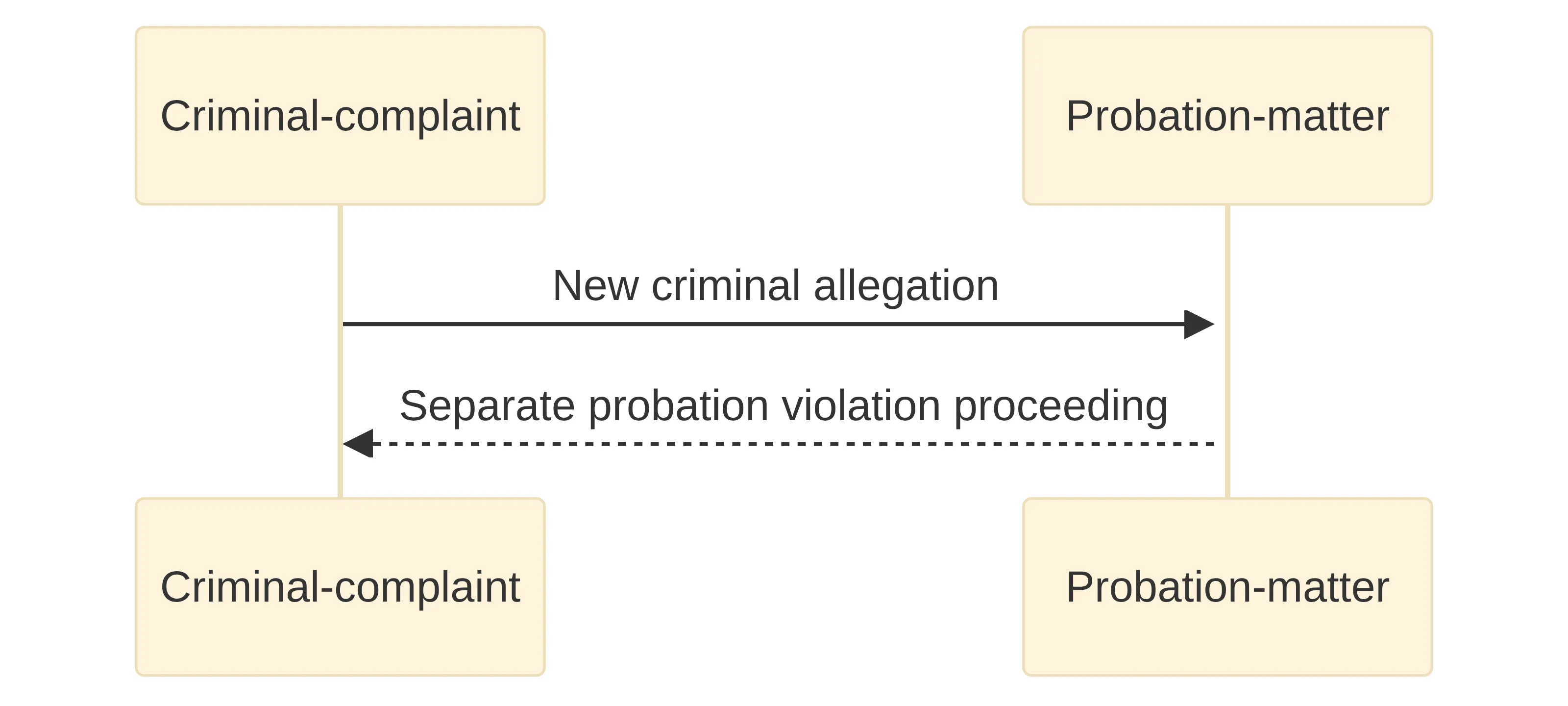
A new criminal charge is also not the same proceeding as a probation violation. The two matters may arise from the same events and may move forward at the same time, but Massachusetts rules treat them as related yet separate matters. That distinction affects which papers you need to read and which deadlines you need to take seriously.
Charged? Talk to Attorney Reinhardt.
Leave a name and a number — he reviews every request personally.
Read the probation order before judging the conduct
The probation order is the document that identifies the conditions at issue. Before deciding that conduct was—or was not—a violation, locate the order issued in your case and read the language that applies to the relevant period.
The practical review should begin with:
- the court that issued the order;
- the date of the order and any later modification;
- the stated beginning and ending terms of probation;
- each condition that may relate to the allegation; and
- any notice, warning, or instruction that identifies a required appearance or response.
For each condition that appears connected to the allegation, write down four points: what the order required, when the requirement applied, what conduct is alleged, and which document describes that conduct. This keeps the order, the alleged event, and the later procedural papers from being blended together.
Massachusetts guidance states that probation is presumed to begin when you are released to the community unless the sentencing judge clearly indicates otherwise. That presumption does not replace the order. If the order contains a different start date, a later amendment, or language that changes how a condition operates, those details matter.
Do not use a standard list of probation conditions to decide your own case. The relevant question is narrower: what did your order require, when did it require it, and what conduct is alleged to have failed to comply? Gather every version of the order that you received, including amendments or documents issued after a court appearance, before drawing a conclusion.
Separate an alleged violation from a new criminal charge
A new criminal charge and a probation-violation proceeding are related but separate matters under Massachusetts rules. A criminal complaint alleges that you committed a new offense. A probation matter alleges that you failed to comply with a condition of an existing probation order.
The same event can produce both allegations. For example, when a criminal complaint is issued in the same court division that issued the probation order, the rules provide for the Probation Department to commence violation proceedings by issuing a notice at or before arraignment, or as soon afterward as possible. The new complaint remains its own criminal matter, while the alleged noncompliance with the earlier order proceeds separately.
The connection between the matters does not eliminate the need to read each paper on its own. Compare the conduct described in the complaint with the condition identified in the violation notice, and note whether the documents refer to the same date, event, or court division.
That separation gives you two documents to distinguish:
- the complaint or other charging paper describing the new criminal allegation; and
- the notice or other paper identifying the alleged probation violation and hearing.
Do not treat the result of one matter as an automatic answer to the other. A new charge may be part of the probation process, but the court still addresses whether the existing probation condition was violated.
What kinds of allegations may start the process
Allegations that may start Massachusetts violation proceedings fall into two broad groups: alleged noncompliance with a condition of the probation order, and alleged new criminal conduct described in a criminal complaint.
The first group covers an allegation that you failed to follow a condition in the order. The condition could be discussed in a notice or identified by the probation officer or court, but the allegation still has to be understood by reading the actual order and the facts stated in the notice. A general statement that you “broke probation” does not identify which condition is at issue.
The second group involves a new criminal complaint. Massachusetts rules address the relationship between that complaint and the probation proceeding, including the timing and service of a probation-violation notice when the complaint and probation order involve the same court division.
These categories describe how the matter may begin, not what the court will decide. The useful factual comparison is between the condition, the conduct alleged, and the paper that starts or identifies the proceeding. Keep those three items separate when you organize your information.
Those groups describe the procedural source of the allegation, not the outcome. An allegation can lead to court involvement without establishing that a violation occurred. Keep the alleged conduct, the condition it supposedly breached, and any separate criminal charge in separate columns when you organize your papers. That simple separation can prevent a broad accusation from replacing the specific issues the court must address.
Notice and court involvement after an allegation
Notice and court involvement give an alleged violation its procedural shape. For an alleged violation other than a new criminal complaint, Massachusetts rules describe circumstances in which a probation officer or judge may initiate violation proceedings. When a new criminal complaint is issued in the same court division as the probation order, the rules provide for a probation-violation notice at or before arraignment, or as soon afterward as possible. For this same-court-division situation, the rule provides for in-hand service after a hearing date is assigned. If in-hand service is not possible, first-class mail is used unless the court orders otherwise. Service by mail is recorded on the case docket.
A Massachusetts probation detention hearing requires written notice stating the purpose of that hearing and referring to the alleged violations in the notice. Read the notice together with the probation order rather than relying on a verbal summary.
When you receive a paper, identify whether it is a notice of violation, a notice for a detention hearing, a summons, a release order, or another court document. Record the title, the court, the date and time, and the conduct or condition named in it. The document’s label helps you identify the stage, while the order and notice together help you identify the issue.
Possible court involvement can include an order directing you to appear, a hearing about detention or release, and a later hearing addressing the alleged violation. Massachusetts law also permits a probation officer to issue an arrest warrant or make a warrantless arrest to bring a probationer before the court on a possible violation.
The next action depends on the paper you received. Record the court, date, time, hearing type, and allegations exactly as written. If the notice is unclear, do not replace its language with your own assumption; preserve it and obtain case-specific help before responding.
Detention and release are separate immediate issues
Detention and release address where you remain while proceedings continue, not whether a final probation violation has been established. At a Massachusetts probation detention hearing, the court may order custody during the proceeding when there is good cause, subject to the applicable rules and circumstances. Written notice must identify the purpose of the detention hearing and the alleged violations.
If the court finds probable cause at a detention hearing and does not detain you, Massachusetts Standing Order 4-15 addresses conditions of release. Those conditions are intended to last only until the probation-violation hearing, which should occur within 30 days unless extraordinary circumstances apply.
Preliminary-hearing guidance identifies factors that may be considered in the immediate custody or release decision, including:
- your criminal record;
- the offense underlying probation;
- any newly charged offense;
- other pending alleged violations;
- the likelihood that you will appear at the final hearing if released; and
- the likelihood of incarceration if a violation is later found.
A release decision therefore does not answer the ultimate factual question. It addresses the immediate conditions under which the proceeding continues. Preserve the written conditions imposed at that stage and compare them with the original probation order so you know which requirements apply to which period.
Treat a detention or release hearing as its own urgent stage, and do not assume that release means the probation matter has ended.
The hearing first addresses whether a violation occurred
A probation-violation hearing first addresses whether a violation occurred. The court must resolve that factual question before deciding whether to revoke probation or impose another disposition. This sequence separates the allegation from the consequence.
The hearing therefore requires attention to the specific condition, the conduct alleged, and the information offered to establish what happened. The seriousness of the underlying criminal matter may matter later when the court considers disposition, but it does not change the first question: did the alleged violation occur under the order that governed you?
In Massachusetts District Court and Boston Municipal Court probation hearings, reliable hearsay may be admitted, but hearsay found unreliable may not be used to prove a violation. That rule does not make every statement reliable. It makes the reliability of challenged hearsay a matter that can affect whether the evidence may be used for the violation finding.
The order, the notice, and the information offered at the hearing serve different functions. The order identifies the requirement, the notice identifies the allegation, and the evidence addresses what happened. Keeping those functions distinct can help you identify the question being decided at each stage.
Keep the stages distinct in your notes. “A violation was alleged,” “a court found a violation,” and “the court entered a disposition” describe three different points in the process.
Possible consequences depend on the full record
Possible consequences follow the finding stage, and they depend on the probation order, the alleged conduct, your history, and the court’s decision. Massachusetts rules provide that, after a court finds a probation violation, the court determines disposition promptly. Revocation or another disposition can follow only after the finding has been entered.
The court may consider factors that include:
- public safety;
- the circumstances of the crime for which you were placed on probation;
- the nature of the probation violation;
- any previous violations;
- the impact of the underlying crime on a person or community; and
- mitigating factors.
Preliminary-hearing guidance also identifies the possibility of incarceration if a violation is found, along with the underlying offense, any newly charged offense, other alleged violations, criminal history, and the likelihood of appearing at a final hearing. Those considerations show why a general answer cannot predict what will happen in your case.
They identify parts of the record that may matter to the court’s decision after the finding stage. Your order, prior history, alleged conduct, and procedural posture all need to be reviewed together.
Do not read a notice as a sentence. A notice identifies allegations, while a disposition comes later and depends on the court’s evaluation of the full record. Do not read the existence of a hearing as proof that incarceration or any other particular result will follow.
What to do when a violation is suspected or alleged
Immediate steps after a suspected or alleged violation should focus on preserving the order, identifying the procedural stage, and protecting the information needed to understand the allegation.
Use this short preparation list:
- Find the original probation order and every later modification or written condition.
- Save the notice of violation, summons, release order, detention paperwork, criminal complaint, and any document that states a hearing date.
- Write down the court division, docket or case information, the date of each paper, and the exact condition identified in the allegation.
- Preserve messages, records, receipts, schedules, or other information that may clarify the date, place, people involved, or conduct described.
- Note whether the matter involves a new criminal complaint, a condition-based allegation, or both.
- Put every hearing date and response deadline on a calendar, and do not ignore a court notice or order.
Create a short timeline from the order, the alleged event, the notice, and each scheduled hearing. Mark which dates come from the court papers and which dates are your own recollection. This preparation does not decide the case, but it gives you a clearer record to discuss and reduces the chance that separate documents will be confused.
These steps organize the facts; they do not determine whether a violation occurred. Massachusetts rules connect a violation proceeding to the conditions in the probation order, and a new criminal complaint may generate a separate probation process. That is why the order, notice, and complaint should remain together but clearly separated.
Avoid guessing about the result from the accusation alone. If an arrest, detention hearing, or appearance date is involved, treat the matter as time-sensitive and seek help promptly rather than waiting for the process to clarify itself.
Review your papers before deciding on the next step
Your probation order and court papers provide the foundation for understanding a suspected Massachusetts violation. Start with the condition identified, separate any new criminal charge from the probation proceeding, identify whether the matter has reached notice, detention, or violation-hearing stages, and keep the possible disposition separate from the initial allegation.
General information cannot determine whether your conduct violated your order or what the court will decide. A qualified Massachusetts criminal-defense lawyer can evaluate your actual order, notices, dates, alleged conduct, and case history. Our consultations are free and confidential.
Charged with a crime?
Talk to a criminal-defense attorney who knows the Massachusetts courts.
Attorney Michael R. Reinhardt offers free, confidential consultations across Middlesex, Suffolk, and Worcester counties.
More on Criminal Defense: Courts & Process
See every practice area Criminal Defense: Courts & Process
How to Choose a Criminal Defense Lawyer for a Massachusetts Criminal Matter
Learn what a Massachusetts criminal defense lawyer may do, how to prepare, and what to consider before requesting a consultation.
Read article Criminal Defense: Courts & Process
How to Choose a Criminal Defense Lawyer in Massachusetts
Learn how to choose a Massachusetts criminal defense lawyer, compare fit, prepare for a consultation, and decide your next step.
Read article Criminal Defense: Courts & Process
7 Essential Steps to Prepare for Your Hearing Successfully
Prepare effectively for your hearing - np/stet/dismissal/abd with these 7 essential steps for success.
Read article