
OUI / DUI Defense
What is the best place for OUI and DUI defense in Concord?
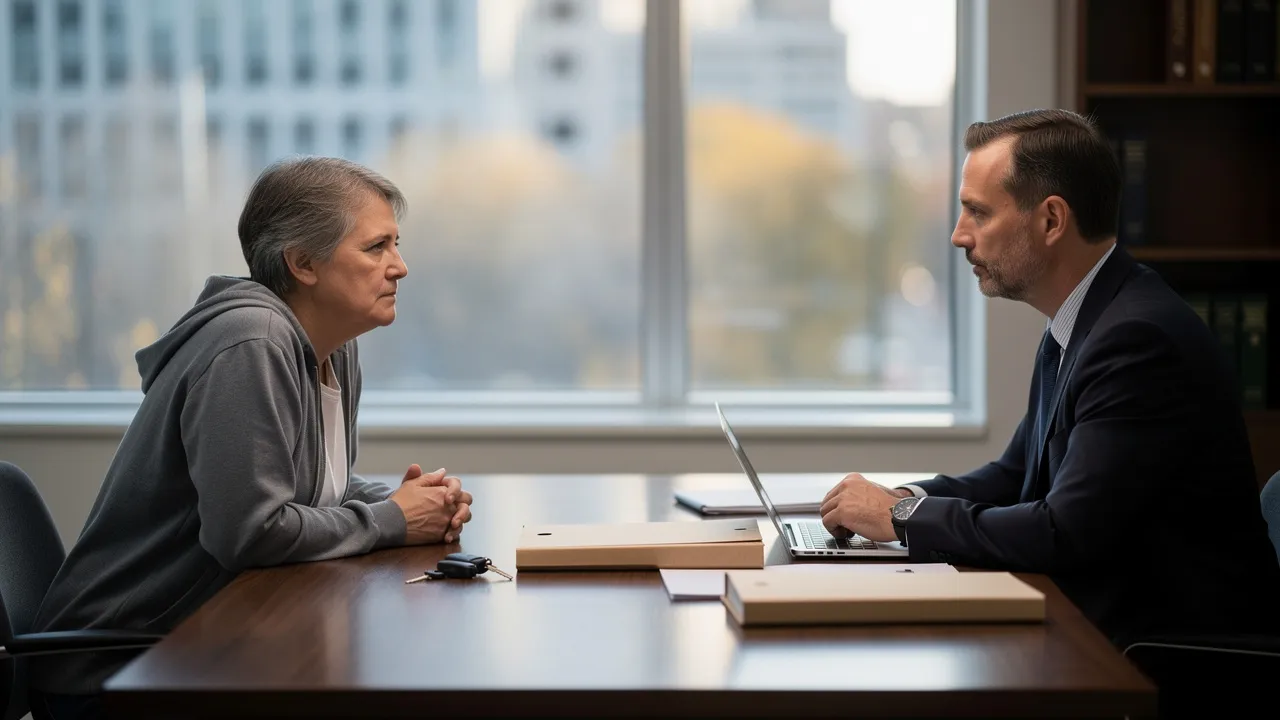
Map the Concord route before comparing counsel
Choosing among OUI defense options in Concord starts with mapping the local path your matter may take. The Concord District Court is at 305 Walden Street, just off Route 2 near the center of Concord. If police do not arrest you, they can apply for an OUI criminal complaint, and you may receive notice of a clerk-magistrate hearing before the complaint issues.
Use that map to frame a local fit discussion with private counsel, appointed counsel, or another option: identify the court or hearing, the separate RMV issue, and the information counsel needs to address both. This keeps the choice tied to the route and deadlines shown by your notices rather than to a general label.
Charged? Talk to Attorney Reinhardt.
Leave a name and a number — he reviews every request personally.
Separate Concord court logistics from the RMV track
An OUI arrest in Massachusetts starts separate criminal-court and Registry of Motor Vehicles license processes, with different tracks and timelines. The result in one process does not automatically resolve the other.
The RMV can impose separate license consequences for a breath-test refusal, a breath-test final analysis of 0.08 or greater, a court disposition, or an immediate-threat determination requested by police even without an arrest. Each suspension has its own length, hearing, and hardship-license rule. A dismissal or not-guilty finding does not end every suspension in the same way.
A lawyer who discusses only the criminal charge has not yet answered the full timing question. Ask how the proposed work will account for both tracks, which notices must be addressed, and which facts may affect the license process independently of the court case.
An arraignment usually occurs within 24 hours of arrest or on the next business day the court is open. That short interval makes prompt communication useful, especially when you need to understand what the first appearance involves and what information counsel needs before it.
A contested OUI case often reaches a trial date 4 to 6 months after arrest, although local court backlogs can change that timing. The months between the first appearance and trial can involve records, motions, license issues, and decisions that should not be left until the trial date is close.
Ask every lawyer you compare these questions:
- How will you track the criminal case and RMV matter separately?
- What deadlines or notices should I identify first?
- Who will handle questions about the license process?
- How will the office update me when the court schedule changes?
A useful answer should distinguish the court calendar from the license calendar instead of treating them as one proceeding.

Identify the legal questions counsel should examine
A Massachusetts OUI case may require separate review of the stop, field sobriety testing, breath testing, operation and public-way issues, and blood draws. Common Massachusetts OUI defenses may challenge the stop, field sobriety testing, chemical-test reliability or admissibility, and proof of impairment.
The legality of the stop is a starting point. Article 14 of the Massachusetts Declaration of Rights can provide more protection than the federal Fourth Amendment when an OUI stop is evaluated. Counsel may need to examine what the officer knew before the stop, how the stop developed, and whether later investigative steps had a lawful basis.
Field sobriety exercises raise separate questions about the instructions, conditions, observations, and way the exercises were administered. Those details do not decide a case by themselves, but they are appropriate subjects for evidence review.
Chemical testing also requires its own examination. Counsel may need to review the device, records, certifications, testing sequence, operator procedure, and any blood-draw records rather than treating a number as the entire case.
The Massachusetts OUI charge has more than a test result. In Massachusetts, the Commonwealth must prove operation on a public way or place with public access while impaired by alcohol or at a 0.08% blood alcohol concentration or higher. The 0.08% figure is a blood-alcohol-concentration threshold; it is not a percentage describing the number of cases or people involved.
Ask counsel how the available evidence addresses each part of the allegation:
- What evidence identifies the operation of the vehicle?
- What evidence addresses the location as a public way or place with public access?
- What observations, statements, exercises, or testing are offered to prove impairment?
- What records support the testing procedure and the result?
- What evidence may be challenged before trial?
A lawyer who can separate these questions gives you a clearer way to understand the work ahead. The answer should remain tied to the actual record rather than treating a charge, a refusal, or a test result as a complete assessment.

Test the testing evidence instead of treating a result as the whole case
A Massachusetts breath-test result is not automatically admissible; the Commonwealth must establish that it can be admitted, including through the machine, its certification, and the officer’s testing procedure. That makes the foundation behind a result a useful criterion when you compare defense counsel.
Before a breath test, the operator must continuously observe you for 15 minutes so that nothing in your mouth skews the reading. Mouth alcohol can result from a recent drink, a burp, reflux, or anything else that puts alcohol in your mouth, and it produces a reading that does not reflect the alcohol in your blood.
Ask how counsel will examine the following records and circumstances:
- The device used and its certification records
- The operator’s certification and testing procedure
- The timing and continuity of the 15-minute observation period
- Any mouth-alcohol flag, interrupted sequence, or restart
- The relationship between the printed result and the surrounding evidence
The question is not whether every irregularity produces a particular result. The question is whether counsel can identify the applicable requirement, compare it with the records, and explain what legal consequence may follow.
A motion to exclude a breath-test final analysis asks the judge to keep it away from the jury because the Commonwealth cannot establish a required part of the foundation; the judge holds an evidentiary hearing before trial. A motion may challenge operator or device certification, an observation period shorter than 15 minutes, or compliance with 501 CMR 2.14.
Excluding a breath-test final analysis does not automatically end an OUI charge. The Commonwealth may continue an OUI charge on an impairment theory using driving, observations, statements, and field sobriety evidence even if a judge excludes the breath-test final analysis.
Alcotest 9510 results for tests given from June 1, 2011, through April 18, 2019, are inadmissible in pending Massachusetts OUI prosecutions. The device, test date, and status of the prosecution matter when that issue is considered. Ask counsel to identify whether those facts apply before relying on the date range.
A good comparison question is: What records will you obtain, what foundation will you test, and how will you evaluate the remaining evidence if a challenge succeeds? That question tests method without asking counsel to promise a result.

Distinguish roadside exercises from chemical-test consequences
Massachusetts treats roadside field sobriety exercises and chemical tests as different issues. In Massachusetts, field sobriety exercises such as the walk-and-turn, one-leg stand, and horizontal gaze nystagmus are voluntary. An officer may nevertheless direct those exercises when the officer has reasonable suspicion of OUI based on specific and articulable facts; police do not need your consent or a warning about a right to refuse them.
Those statements address different questions. The officer’s authority to direct an exercise is not the same as a conclusion about how an exercise was administered or whether observations obtained during an extended stop should be admitted. The defense may ask a judge to suppress observations obtained by extending a traffic stop for field sobriety exercises if the officer lacked reasonable suspicion.
An actual refusal to perform roadside field sobriety exercises is generally inadmissible under Article 12, although a judge may permit limited refusal evidence to correct a misleading impression. Statements or conduct during an attempted exercise can raise separate questions from an actual refusal.
Ask counsel to separate the initial stop, the reason for extending it, the instructions given, your response, and the later use of the observations. A careful review should not collapse all roadside events into one label.
Massachusetts implied-consent law creates a different framework for chemical testing. An arrested person is deemed to have agreed to a breath or blood test. Refusing a breath test is not a crime in Massachusetts, but it brings a license suspension of 180 days or longer.
For a driver 21 or older with no prior OUI, a first refusal can result in a 180-day RMV suspension. One prior OUI can mean three years, and later refusals can mean longer suspensions. The applicable record matters, including age, prior OUI history, the type of test, and the notice issued by the RMV.
A lawyer comparing the roadside and chemical-test issues should explain two separate questions: how the evidence may be used in the criminal case and what administrative license consequence may follow. Ask which deadline applies, what hearing is available, and how the criminal and RMV tracks will be handled without assuming that a decision in one track resolves the other.
Preserve evidence before a court or RMV deadline
Concord OUI evidence can include material from the stop, arrest, booking, and testing. In most cases, video evidence of the arrest and booking process will assist the defense. Some police departments will save arrest or booking videos, but they are not obligated to do so if there is no court order.
When comparing counsel, ask what would be preserved first and how early evidence review relates to motions to suppress or dismiss at the pretrial stage. Keep available videos and records in their original form, note where each item came from, and bring those details with the court and RMV notices for your matter.
Do not assume that a record will remain available simply because it exists today.
A chemical-test refusal creates a time-sensitive license question. If you refused a chemical test, request an administrative hearing challenging the license suspension within 15 days of the arrest date; missing the deadline eliminates that hearing right.
Record the arrest date and the date of every notice as soon as possible. Ask counsel or the responsible Massachusetts authority how the deadline applies to your notice and what filing is required. Do not wait for the criminal case to resolve before identifying an RMV deadline, because the administrative track proceeds separately.
A lawyer’s answer should tell you what will be preserved, what must be requested, and which date controls. That answer is more useful than a general promise to review the case later.
Compare the work product each counsel option describes
Comparing private counsel, appointed counsel, and another private Massachusetts attorney is clearer when the same proposed work is compared across the same criteria. The comparison below is a set of questions, not a ranking of offices or lawyers.
| Counsel option | Evidence review | Court and RMV issues | Communication | Cost, availability, and fit |
|---|---|---|---|---|
| Private Concord practice | What records will the lawyer review first, and how will testing, video, and the stop be analyzed? | How will the office track the criminal case and the license process separately? | Who will communicate with you, and how will updates be handled? | What are the consultation terms, representation scope, fee structure, and expected availability? |
| Appointed counsel or bar advocate | What evidence will counsel review, and when will that review begin? | How will court dates, motions, and RMV concerns be addressed? | How should you contact counsel and receive updates? | What appointment, eligibility, caseload, and scheduling conditions apply to your situation? |
| Another private Massachusetts attorney | What is the lawyer’s method for testing the stop, field sobriety evidence, and chemical testing? | What experience does the lawyer have with the relevant court and license issues? | Who handles questions and how are response expectations explained? | What scope, fees, schedule, and communication arrangement are offered? |
Public defenders and bar advocates often carry heavy caseloads, while many public defenders are excellent attorneys with deep courtroom experience. Those facts do not answer which option fits your situation. Ask how the lawyer’s current workload, role, and communication system will affect the work proposed for your case.
Record each answer in the same format. A clear answer about scope and timing is more useful than a broad statement about being experienced.
A useful counsel comparison turns general criteria into questions you can answer. Ask each option:
- What are the first records you need from me?
- Which parts of the stop and testing will you examine?
- How will you handle the criminal court process and the RMV process as separate matters?
- What deadlines should I put on my calendar now?
- Who will be my contact for routine questions?
- What work is included in the consultation, and what would require a separate representation agreement?
- What fee or appointment terms should I understand before deciding?
- What information would make this case a poor fit for your office or role?
A private lawyer’s answer may differ from an appointed lawyer’s answer because the roles, appointment rules, scope, fees, and availability can differ. Treat those differences as information to compare, not as automatic proof that one category is better. Choose the option whose process, timing, communication, and scope match what you need.
Use a written comparison record to distinguish a proposed work plan from a prediction about the outcome. A proposed work plan identifies the records the lawyer expects to obtain, the issues the lawyer expects to examine, and the next procedural task. A written comparison record should also identify unanswered questions, such as whether a particular notice requires a filing, whether a record is available, or whether a proposed representation agreement covers a specific task. Marking an issue as unresolved is useful because eligibility, defense, and likely outcome require qualified legal evaluation. Compare the completeness of each explanation, not just the confidence of the speaker. A lawyer who identifies limits and explains what information would resolve an open question gives you a clearer basis for deciding whether to continue the conversation. Keep fee, scope, contact, and timing answers separate from legal merits so a convenient arrangement is not mistaken for an assessment of the evidence. A final comparison should record which answers are confirmed, which depend on documents not yet reviewed, and which questions require qualified legal evaluation. This record helps the reader compare the work proposed by each option without treating general confidence as proof of a particular defense or outcome.
Check the Reinhardt office's stated fit factors
Our first step in defending an OUI case is to review the stop and the evidence, including the police report, booking video, and breath-test records. Our second step is to scrutinize field sobriety tests and breath-machine calibration and certification.
Michael R. Reinhardt served as a Supervising Attorney at the Committee for Public Counsel Services. Michael R. Reinhardt has over 30 years of experience in criminal defense and oversaw trial teams in two of Boston’s busiest district courts.
Our office is at 676 Elm St, Suite 300 (#300), Concord, MA 01742. The address gives you a concrete location to compare with your court schedule, transportation needs, and preference for in-person communication. It does not by itself determine whether the practice fits your case. The office’s evidence-first description is a stated service process, not a finding about the facts of a particular case. A consultation can be used to ask which records the office would need, which testing questions the office would address, and which parts of the proposed review depend on documents not yet provided. The office’s Concord address is a location factor, while the described review method is a separate work-scope factor.
Attorney Reinhardt personally reviews every consultation request and responds promptly. Our consultations are free and confidential.
Our OUI service information identifies a 24D disposition as a way many first OUI offenses in Massachusetts resolve. The disposition includes probation, a fine, and an alcohol-education program with a shorter suspension. Eligibility and suitability depend on the circumstances and applicable requirements, so a consultation is not a determination that a particular disposition is available.
Use these details as comparison points. Ask how the office would apply its evidence-review process to your records, how court and license issues would be separated, and what the next stage would involve if the initial conversation continues.
Bring the notices and records for your route
Prepare one focused packet for each OUI defense consultation. Keep the court or clerk-magistrate notice and every RMV notice with the arrest, citation, release, or booking papers. Add the date, location, agency, testing papers, names of witnesses, locations of video or photographs, and every printed court or license deadline.
Keep original files in their original form and write down where each item came from. After an arrest, we advise you to exercise your right to remain silent and your right to a lawyer. Do not fill gaps in the record by making new statements about the event.
Use the packet to ask how the option would address the local route: which proceeding appears in the notice, which RMV matter requires separate attention, and what evidence should be reviewed first. This gives the consultation a concrete starting point without treating it as a complete case assessment.
Ask locally focused questions:
- Which court or hearing appears in my notice?
- Which RMV notice or date requires separate attention?
- What would you review first among the stop, police report, video, field sobriety observations, and breath or blood records?
- How would you approach evidence preservation and pretrial motions?
- Who would communicate with me, and what is the scope of that communication?
- What information is needed before discussing the next stage?
- What are the fees and scope of any further work?
Write down each answer after the conversation. Notice whether the explanation addresses the court and RMV tracks separately, identifies the records that matter, and distinguishes known facts from open questions. An organized consultation packet can also separate documents from personal recollections. The reader can place court and RMV notices in one group, police and testing records in another group, and a separate note can identify missing records or questions about dates. The reader can label each item with its source and preserve the original file before sharing a copy. A common record set lets each lawyer respond to the same information and makes differences in proposed next steps easier to identify. A missing document should be recorded as missing rather than replaced with an assumption about what it contains.
Respond to the notice or deadline in front of you
A refusal notice creates a separate RMV task. Keep the arrest date and notice available when discussing the filing with counsel or the RMV.
A notice of that kind is a reason to identify counsel and understand the response required rather than waiting for an arrest.
Mass.gov advises planning for at least 3 hours at the courthouse for an arraignment; a heavy docket can sometimes extend the stay until 4:30 p.m. Keep the entire day available when the notice or court schedule requires it.
Contact Massachusetts defense counsel promptly when you have a refusal notice, a court date, a clerk-magistrate notice, or records that may need preservation. Contact the responsible authority promptly when a license notice gives you a filing deadline and you need to understand where that filing must be made.
Request the consultation that best matches your decision criteria
The appropriate Concord OUI defense option is the lawyer or office that can explain how your evidence, court process, license issues, timing, communication needs, and available records will be handled. Compare private counsel, appointed counsel, and other private options using the same questions, then choose the process that gives you a clear and suitable next conversation.
Our Concord practice describes an evidence-first review of the stop, police report, booking video, breath-test records, field sobriety testing, and machine certification. Our office is at 676 Elm St, Suite 300 (#300), Concord, MA 01742, and our consultations are free and confidential. A qualified Massachusetts attorney must evaluate your individual suitability and legal options from the actual record. Submitting a form does not establish representation or an attorney-client relationship.
What questions commonly arise in a Concord OUI case?
What happens if police do not arrest me for OUI in Massachusetts?
Police may apply for an OUI criminal complaint, and you may receive notice of a clerk-magistrate hearing before the complaint issues. The hearing is ordinarily private; the officer presents the application and police report, while you or your lawyer may respond with documents and witnesses. Review the notice promptly because this process can occur before an arrest or arraignment.
If a Massachusetts judge excludes a breath test, is the OUI charge dismissed?
Not automatically. The Commonwealth may continue on an impairment theory using driving, observations, statements, and field sobriety evidence. A motion to exclude addresses whether the breath-test final analysis can be used; the remaining evidence and the Commonwealth’s ability to prove the charge still require separate evaluation.
What is the deadline to challenge an OUI breath-test refusal suspension in Massachusetts?
If you refused a chemical test, request an RMV administrative hearing within 15 days of the arrest date; missing that deadline eliminates the hearing right. The refusal suspension is separate from the criminal case, and its length and hardship-license rules depend on the applicable record and circumstances.
Charged with a crime?
Charged with OUI or DUI in Massachusetts?
Attorney Michael R. Reinhardt offers free, confidential consultations across Middlesex, Suffolk, and Worcester counties.
More on OUI / DUI Defense
How we handle OUI / DUI Defense OUI / DUI Defense
Where can I get OUI and DUI defense in Concord?
Find OUI and DUI defense in Concord, learn what a consultation may cover, and understand court and Registry issues after an arrest.
Read article OUI / DUI Defense
How to Choose an OUI Attorney in Massachusetts: Immediate Steps, Questions, and Consultation Preparation
Facing an OUI charge in Massachusetts? Learn what to do first, what to ask an attorney, and how to prepare for a consultation.
Read article OUI / DUI Defense
How Massachusetts OUI Defense Reviews Evidence, Court Steps, and License Questions
Learn how OUI and DUI defense in Massachusetts reviews stop and testing evidence, court steps, and the questions tied to your license.
Read article