
OUI / DUI Defense
What Is a Motion to Suppress in Massachusetts OUI Cases? Evidence, Process, and Legal Review
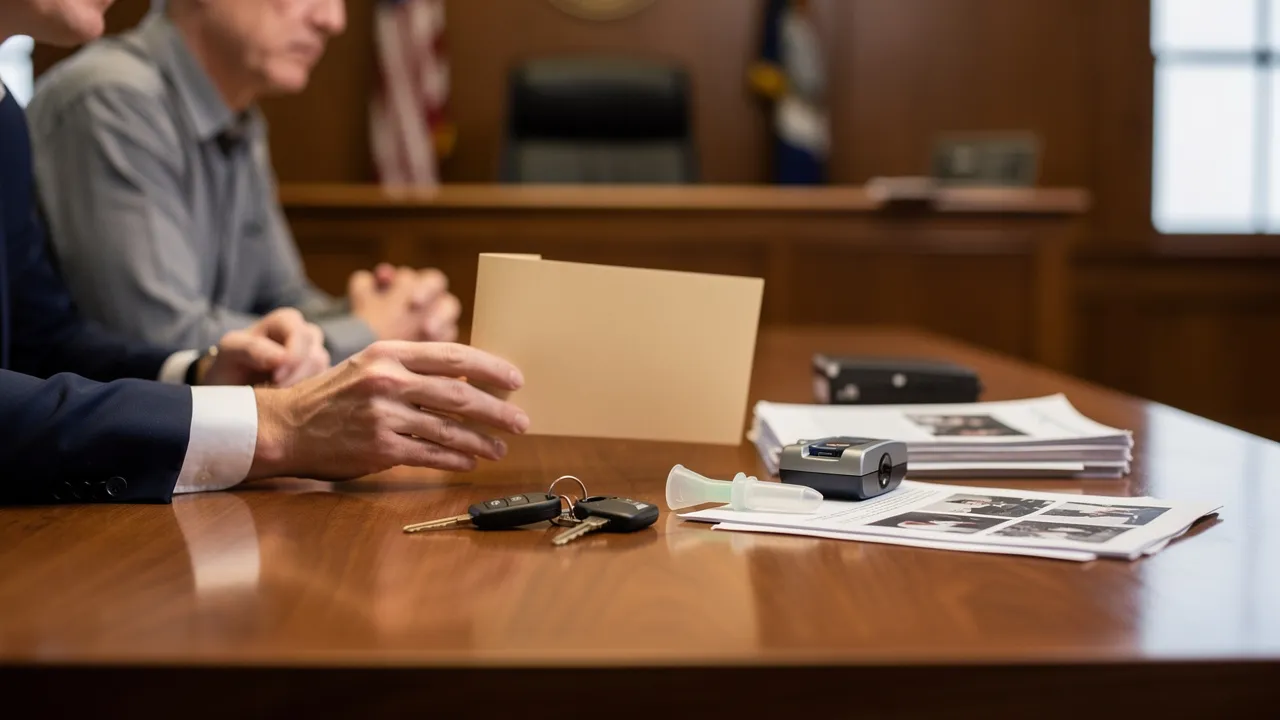
What a motion to suppress does in a Massachusetts OUI case
A motion to suppress is a request made before trial to exclude specified evidence from a Massachusetts OUI case. The request focuses on particular evidence rather than asking the court to decide the entire case at once. That evidence might be a statement, an item obtained during a search, an observation, or testing-related material, depending on the facts and the legal issue being raised.
A suppression motion must be based on a constitutional provision or a specific statute that permits the evidence to be excluded. The legal ground therefore matters. A concern that police conduct felt unfair, a disagreement with an officer’s account, or a belief that the evidence is unreliable does not by itself establish that suppression is available. The question is tied to the evidence, the event that produced it, and the legal protection or statute invoked.
For an OUI case, that focus gives you a practical way to organize the facts. Instead of asking only whether the charge is accurate, you can ask how each significant piece of evidence came into the case. When did the stop begin? What happened before the detention changed? What was said before or after questioning? How was testing conducted and documented? Those questions do not decide whether a motion should be filed, but they identify the subjects a Massachusetts defense lawyer may need to examine.
A motion to suppress is not itself a dismissal, an acquittal, or a finding that you are not guilty. It is a pretrial request directed at specified evidence. Whether excluding that evidence changes the prosecution depends on what the court rules and what other evidence remains.
Charged? Talk to Attorney Reinhardt.
Leave a name and a number — he reviews every request personally.
Why the early minutes of an OUI stop matter
The early minutes of a Massachusetts OUI stop can determine how later evidence is evaluated. In a Massachusetts case that begins with a motor-vehicle stop, the admissibility of each item of evidence depends on whether the step that produced it was lawful. The sequence matters because later evidence may be connected to what officers observed, asked, seized, or did after the vehicle stop began.
Massachusetts OUI cases may depend on what police observed and seized after the vehicle stop began. That description can include the initial observations at the roadside, the development of the detention, any search or seizure, statements, and testing evidence. The point is not that every item is treated the same way. The point is that each item has a history, and that history can become part of the legal review.
A useful timeline starts before the emergency lights came on and continues through booking or testing. Record the parts you remember without trying to decide the legal result:
- Where the vehicle was and what happened immediately before the stop.
- What the officer said about the reason for stopping you.
- Whether the interaction changed from a brief roadside encounter to continued detention.
- What you were asked to do, say, or provide.
- What officers observed, searched for, seized, or recorded.
- When you were taken for booking, questioning, or testing.
A timeline cannot establish whether a police step was lawful. It can help separate the events so that each item of evidence is reviewed in the order it was produced. That sequence is often more useful than treating the entire stop as one undifferentiated event.

Massachusetts Article 14 and evidence obtained during a stop
Massachusetts Article 14 is a state constitutional protection that may matter when evidence comes from a motor-vehicle stop, detention, search, or seizure. Article 14 of the Massachusetts Declaration of Rights provides at least as much protection as the Fourth Amendment and can impose stricter limits than federal law in some circumstances.
That distinction matters because a review under Massachusetts law is not limited to a general federal question. The analysis may require attention to the state constitutional protection as well as the particular events documented in the case. A lawyer examining the evidence may therefore need to identify the police action at issue, the information available to officers at that moment, and the evidence that followed.
Article 14 does not create an automatic result for every OUI stop. Its relevance depends on the conduct being challenged and the facts established through the available records and testimony. You should treat it as a legal source that may frame the suppression question, not as a conclusion that evidence in your case must be excluded.
Questions about the stop, detention, and search
The stop, detention, and search should be reviewed as connected events with distinct stages. In Massachusetts OUI cases, the charge may depend on what police observed and seized after the vehicle stop began.
The first review should preserve the chronology rather than assume that one answer resolves every later question. Useful questions include:
- What reason did the officer give for stopping the vehicle?
- What did the officer say or observe before asking you to remain, exit, or continue with the interaction?
- When did you understand that you were not free to leave?
- What questions were asked before the investigation moved forward?
- Did police look inside, search, or take anything from the vehicle, your clothing, or your belongings?
- What evidence resulted from each step?
Those records can be compared with your account of the sequence. Differences in timing, wording, or description may identify a subject for legal review, but they do not by themselves establish that a suppression motion will succeed.
Bring the focus back to a specific item. If the issue concerns a statement, identify the event that produced it. If it concerns an observation, identify when and how the observation was made. If it concerns a seizure, identify what was taken and what happened immediately before it. The resulting questions are more useful than a broad assumption that the whole case rises or falls on the initial stop.
When statements or interrogation evidence may raise a suppression issue
A statement or confession may raise a suppression issue when the circumstances allegedly involved a Miranda violation. A suppression motion can challenge a confession allegedly obtained in violation of Miranda. The issue is therefore tied to the statement, the questioning that produced it, and the legal basis offered for excluding it.
Your account should distinguish what was said from when and how it was said. Write down the conversation as accurately as you can remember it, including whether questions were asked at the roadside, during transport, at booking, or later. Note who was present, whether the exchange was recorded, and whether the statement appears in a police report, video, or other document.
The existence of a statement does not answer whether suppression is available. A case-specific review must examine the surrounding circumstances and the records that preserve them. The same approach applies if the prosecution relies on a recorded exchange, an account attributed to you, or a statement described by an officer rather than captured on video.
Do not assume that challenging one statement challenges every other item of evidence. Identify the particular statement and the evidence that followed it. A lawyer can then assess whether the stated legal ground reaches that evidence and whether the issue belongs in a suppression motion or requires a different form of review.
Why OUI testing evidence needs a separate review
OUI testing evidence deserves a separate review because field sobriety observations, breath-test material, and related records may have different origins and documentation. We attack OUI tests by scrutinizing field sobriety tests and breath-machine calibration and certification.
That review does not treat every testing concern as a suppression issue. It asks what the evidence is, how it was obtained, how it was recorded, and what legal question it raises. A field sobriety allegation may depend on the officer’s description of the location, instructions, conditions, and your performance. Breath-test evidence may require attention to the records surrounding the test and the machine’s calibration and certification.
When organizing testing information, separate the materials into categories:
- The officer’s report and any description of field sobriety testing.
- Booking video or other recordings showing the interaction.
- Breath-test records and the time associated with the test.
- Documents concerning breath-machine calibration and certification.
- Statements about whether testing was requested, completed, declined, or interrupted.
Ask how each item entered the case and whether the records agree with one another. A testing document may affect the case in more than one way, and a challenge to testing may not be the same as a challenge to the stop or a statement. The correct path depends on the specific evidence and the legal issue presented.

How a Massachusetts suppression motion generally fits before trial
A Massachusetts suppression motion generally fits into the pretrial part of a criminal case. Under Massachusetts Rule 13(c)(2), a defense or objection that can be decided without trying the general issue should ordinarily be raised before trial by motion, subject to exceptions. A suppression question is therefore ordinarily addressed before the trial rather than saved for an informal discussion after the evidence has already been presented.
That rule describes the general procedural posture, not a deadline that can be applied to every case without examining the court, charge, and procedural history. Missing a filing or hearing requirement can have consequences, so you should not rely on a general article to calculate what applies in your case.
The general path may involve several stages:
- The defense identifies specific evidence and the legal basis for seeking exclusion.
- The motion is presented within the case’s pretrial procedure.
- The court considers the evidence and arguments relevant to the challenged police action or statement.
- The court issues a ruling on the evidence covered by the motion.
- The parties and court then address the case in light of that ruling and any evidence that remains.
These stages describe a framework, not a promise that every case will use the same sequence or produce the same record. Exceptions may affect the timing or availability of a motion. A Massachusetts defense lawyer must examine the actual docket and case materials before giving procedural guidance.
What a suppression hearing may reveal about the case
A suppression hearing may reveal how the prosecution understands the evidence-producing events. A suppression hearing may reveal the prosecution’s theory and supporting evidence and may provide a preview of its case-in-chief. The scope of that information depends on the issues being litigated and the evidence presented at the hearing.
A hearing may also give defense counsel an opportunity to question police on the record. That questioning may produce information or impeachment material that could help if the case goes to trial. A difference between an officer’s hearing testimony and another account may become a subject for further review, but the existence of a difference does not automatically determine credibility or the final result.
Think of the hearing as a focused examination of a particular evidence question, not as a substitute for the trial. The court may consider testimony, recordings, reports, and other materials connected to the challenged evidence. The parties may concentrate on what officers knew, what they did, and what resulted from those actions.
The hearing may address two related matters. It may address whether specified evidence should be available for use in the case, and it may clarify the prosecution’s account of events. The useful question is what the proposed motion would examine and what information the hearing could reasonably bring into the record.
What happens to the case when evidence is suppressed
Suppression concerns the use of specified evidence. A motion to suppress seeks to exclude evidence; it is not itself a dismissal, complaint denial, or finding of not guilty. If the court grants the motion as to particular evidence, that ruling addresses the evidence covered by the decision rather than automatically ending every part of the prosecution.
The practical effect depends on what the ruling reaches and what evidence remains. Excluding one statement, observation, seized item, or testing record may change the material available to the prosecution. The remaining evidence may still be relevant to the charge. In other cases, the affected evidence may be significant enough that the prosecution’s position changes. The outcome cannot be predicted from the label “motion to suppress” alone.
Massachusetts criminal cases can end through different mechanisms, including a prosecutor’s nolle prosequi, a judge’s dismissal on a recognized legal ground, a complaint not being issued before arraignment, or a required finding of not guilty when trial evidence is legally insufficient. Those outcomes are distinct from suppression. A motion does not convert into one of them merely because evidence is excluded.
The Law Office of Michael R. Reinhardt states that it litigates motions to suppress evidence when the stop, arrest, or testing was improper, which can end the case. That is a possible case effect, not a representation that exclusion will occur in your matter. The useful assessment is narrower: identify the evidence at issue, determine what the motion seeks to exclude, and evaluate what the case would contain if that evidence were unavailable.
Records and questions to bring to a Massachusetts OUI lawyer
The records and questions you bring to a Massachusetts OUI lawyer should map the evidence to the event that produced it. Our OUI case review includes breath-test records. We also scrutinize field sobriety tests and breath-machine calibration and certification.
Gather the materials you already have and organize them by event rather than by conclusion. A useful preparation file may include:
- The citation, complaint, summons, release paperwork, or other court papers in your possession.
- The police report and any supplemental reports.
- Booking video, roadside video, cruiser video, or other recordings you received.
- Breath-test records and documents concerning calibration or certification.
- Any paperwork or recording describing field sobriety testing.
- Notes about statements, questioning, searches, seizures, and the timing of each event.
- Names of witnesses and a short description of what each person may have seen or heard.
Then write questions that connect the records to the legal issue. For example:
- What evidence came from the initial stop, and what evidence came later?
- What reason for the stop appears in the police report, and where is it supported in the recording?
- When did the detention continue or change in character?
- What search or seizure occurred, and what evidence resulted from it?
- Which statements are attributed to you, and where are they documented?
- What records describe field sobriety testing or breath testing?
- What does the testing documentation show about calibration and certification?
- If a suppression motion were considered, what specific evidence would it address?
A complete file is not required before you begin organizing questions. Preserve what you have, avoid altering recordings or documents, and identify what is missing. The purpose of this preparation is to make the factual sequence easier to examine; it is not to decide the legal answer in advance.
A simple evidence map can make that preparation more precise. Create a separate entry for each significant item rather than placing every event under a general heading such as “the stop.” For each entry, record:
- Evidence: the statement, observation, seized item, field sobriety information, breath-test record, or other material at issue.
- Producing event: the police action or interaction that led to that evidence.
- Available record: the report, booking video, roadside or cruiser recording, breath-test document, calibration or certification material, or your own notes that describe the event.
- Open question: what remains unclear about the timing, wording, instructions, search, seizure, questioning, or testing.
- Relationship to other evidence: whether the item appears before, during, or after another event in the timeline.
This structure helps keep related but separate issues from being blended together. A statement and a breath-test record may both appear after the stop, but they have different producing events and different supporting records. Listing them separately does not establish that either item should be excluded. It simply gives a lawyer a clearer way to ask what happened and which legal question each item presents.
A second pass can compare the sources without trying to resolve the dispute yourself. Note what the police report says, what a recording appears to show, what the testing documents contain, and what you remember. If those accounts differ about timing or wording, describe the difference specifically instead of labeling it proof of misconduct or proof that the evidence is unusable. If a record is missing, mark it as missing rather than filling the gap with an assumption.
It is also useful to identify what you do not know. You may remember that questioning continued but not the exact point at which it began, or possess a breath-test record without knowing what related documents exist. Those gaps can become focused questions for a consultation. The goal is not to turn a personal timeline into a legal conclusion. It is to show which evidence needs review, what event produced it, and what documents or testimony may help explain that event.
What general information cannot determine about suppression
General information cannot determine whether a suppression issue exists in your Massachusetts OUI case. A motion to suppress is a request made before trial to exclude specified evidence from the case, but that definition does not establish that a motion is available, timely, or supported by your particular records.
General information also cannot determine whether a court will exclude evidence or what effect exclusion would have. The result depends on the evidence identified, the legal basis asserted, the facts established, the procedural posture, and what remains in the case.
Use that boundary to avoid two opposite mistakes. Do not assume that every OUI case supports a suppression motion simply because it began with a traffic stop. Do not assume that no issue exists because the police report presents a confident account. Compare the account with the available video, testing records, timing, and other materials, then identify the specific question that needs legal review.
A focused question is more useful than a prediction. Instead of asking whether the entire case will be dismissed, ask which evidence may be challenged, what event produced it, what legal protection may apply, and what other evidence would remain if the challenge succeeded.
Request case-specific review of your Massachusetts OUI evidence
Case-specific review is the next step when your Massachusetts OUI evidence raises questions about the stop, arrest, statements, search, or testing. We litigate motions to suppress evidence when the stop, arrest, or testing was improper, which can end the case.
Bring the records you have and a clear timeline of what happened. A qualified Massachusetts criminal defense lawyer must decide whether a suppression issue exists, whether a motion is appropriate, and what individual circumstances affect the analysis. Our consultations are free and confidential.
Charged with a crime?
Charged with OUI or DUI in Massachusetts?
Attorney Michael R. Reinhardt offers free, confidential consultations across Middlesex, Suffolk, and Worcester counties.
More on OUI / DUI Defense
How we handle OUI / DUI Defense OUI / DUI Defense
How Massachusetts OUI Defense Reviews Evidence, Court Steps, and License Questions
Learn how OUI and DUI defense in Massachusetts reviews stop and testing evidence, court steps, and the questions tied to your license.
Read article OUI / DUI Defense
Do You Need a Lawyer for a Massachusetts OUI Arraignment? A Decision Guide
Understand a Massachusetts OUI arraignment, counsel status, license issues, and what to prepare before seeking legal guidance.
Read article OUI / DUI Defense
Is DWI a Traffic Violation? Understanding Its Legal Implications
Is DWI a traffic violation? Explore its legal implications and serious consequences.
Read article